 Linkswright
Design the course. Then go play it.
Shape the fairways. Place the hazards. Give every green its own character. Then pick up a club and find out how it plays.
Build your club in career mode, bring the tour to town, and climb from section events to a major as your club’s pro.
Out now for iPhone and iPad. Free to download.
Start with a piece of land.
Choose from eleven settings, including seaside links, open prairie, Lowcountry marshland, autumn Northwoods and coastal cliffs. Start with a layout, then make it yours.
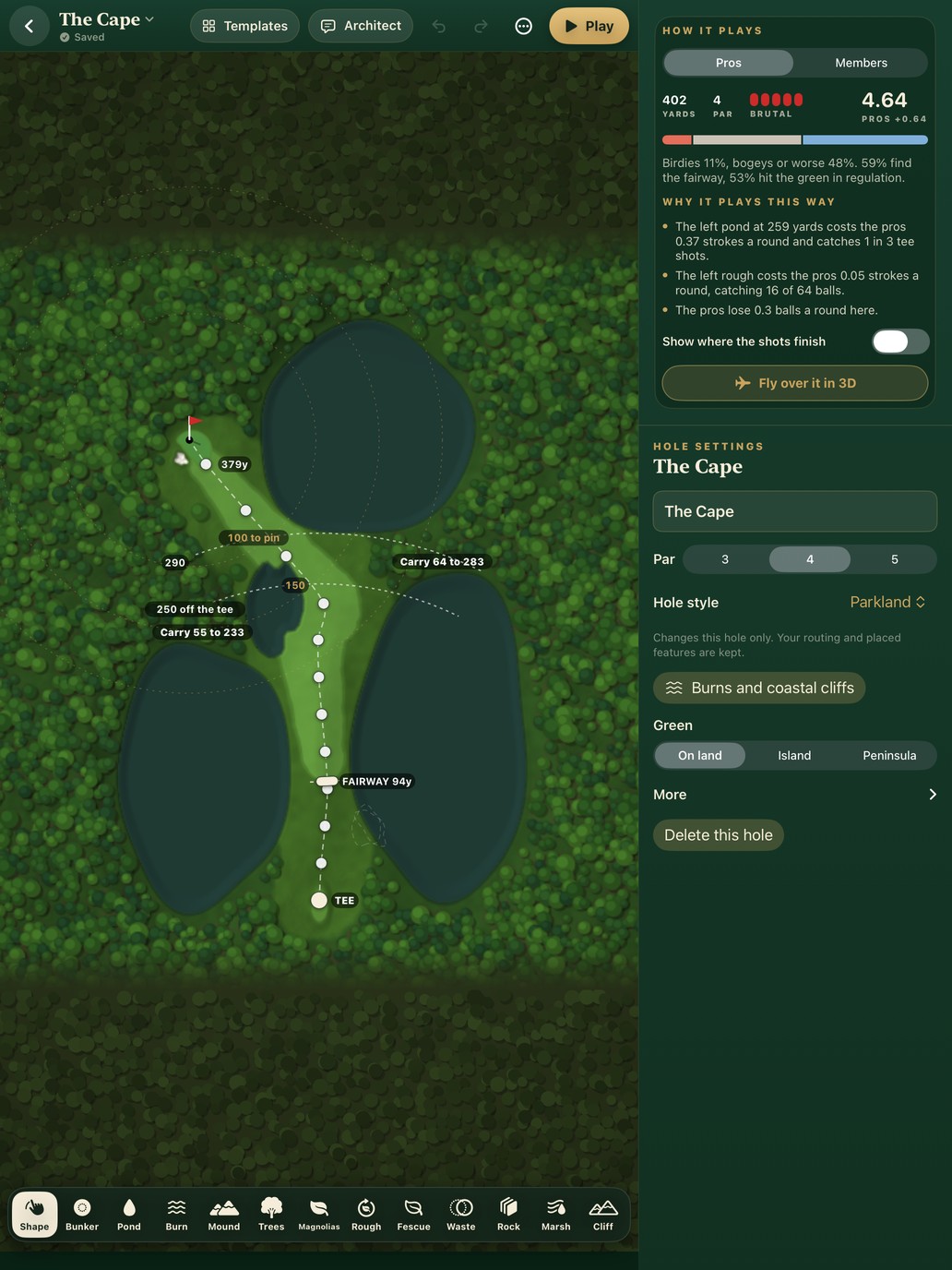
Then lay out the hole from above. Drag the fairway from tee to green, tilt the putting surface, trace a lake with its own coves and a bunker that follows the green. The forecast on the side tells you how the hole plays as you go, for the pros or for your members, and why: which pond, bunker or rough costs the strokes. Every hole is playable the moment you draw it, on the same ground the pros will play.
You can also describe a hole in a sentence, like “a 210 yard downhill par 3 over water,” and the game sketches a first draft for you to finish in the designer. It picks up the basics, such as length, doglegs, water, bunkers and elevation, and leaves the detail to you. It can rough out a whole course the same way, one hole per line. Once a hole is built, ask the architect to change it in plain words, like “move the left bunker 20 yards closer,” and see the change before it’s made.
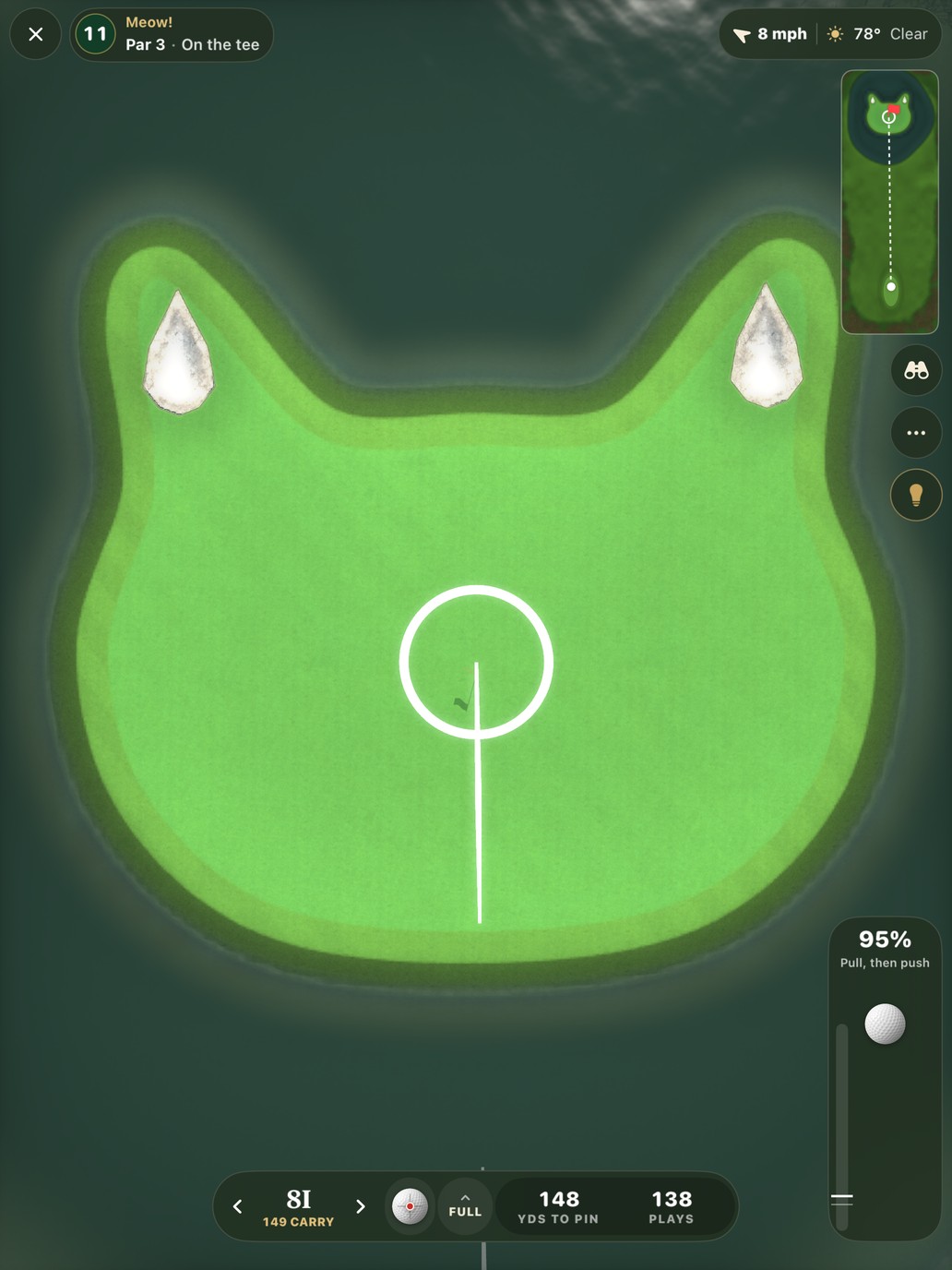
Yes, that green is a cat.
Sand bunkers in both ears, a level putting surface, and water all around. The cat-head island green at Linkswright National is a real, playable hole. Aim for the middle, or take on the flag.
Your course can be a serious test of golf or something your friends have never played before. Share the course file and let them try it.
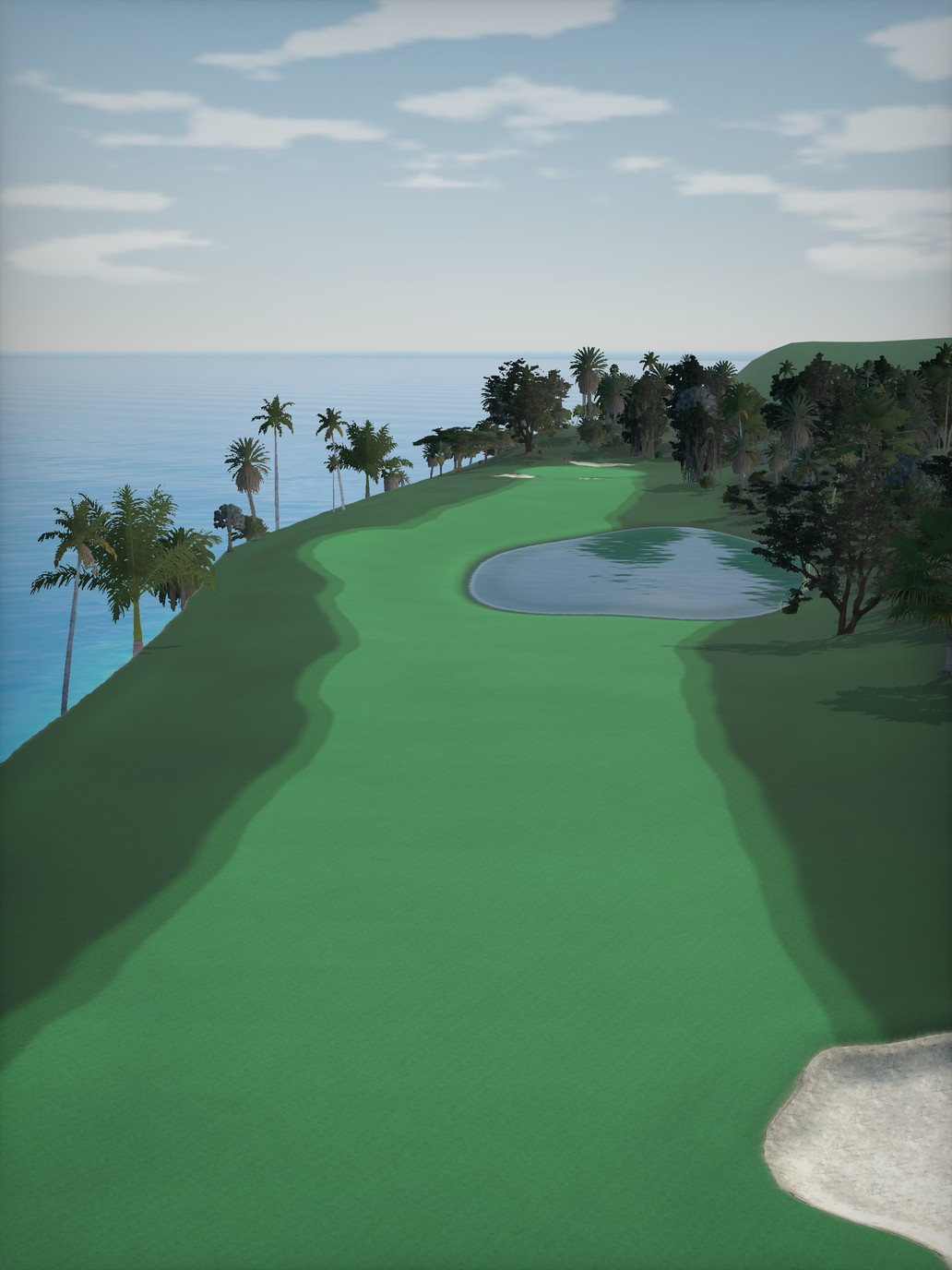
Take the scenic route.
Palms, a pond and a fairway along the sea. The Bay is one of Linkswright National’s tropical holes. Build by the coast, head into the mountains, or give each hole its own setting in the designer.
Then open the gates.
Every bunker and pond comes out of the budget, so you learn quickly which ideas were worth the money. Once the course opens, it has to stand up to real weather.
In the desert, hot air carries the ball farther and your long par 4 starts playing short. Rain softens the fairways and slows the greens, so the same hole can feel like a different one.

Members, dues and green speed.
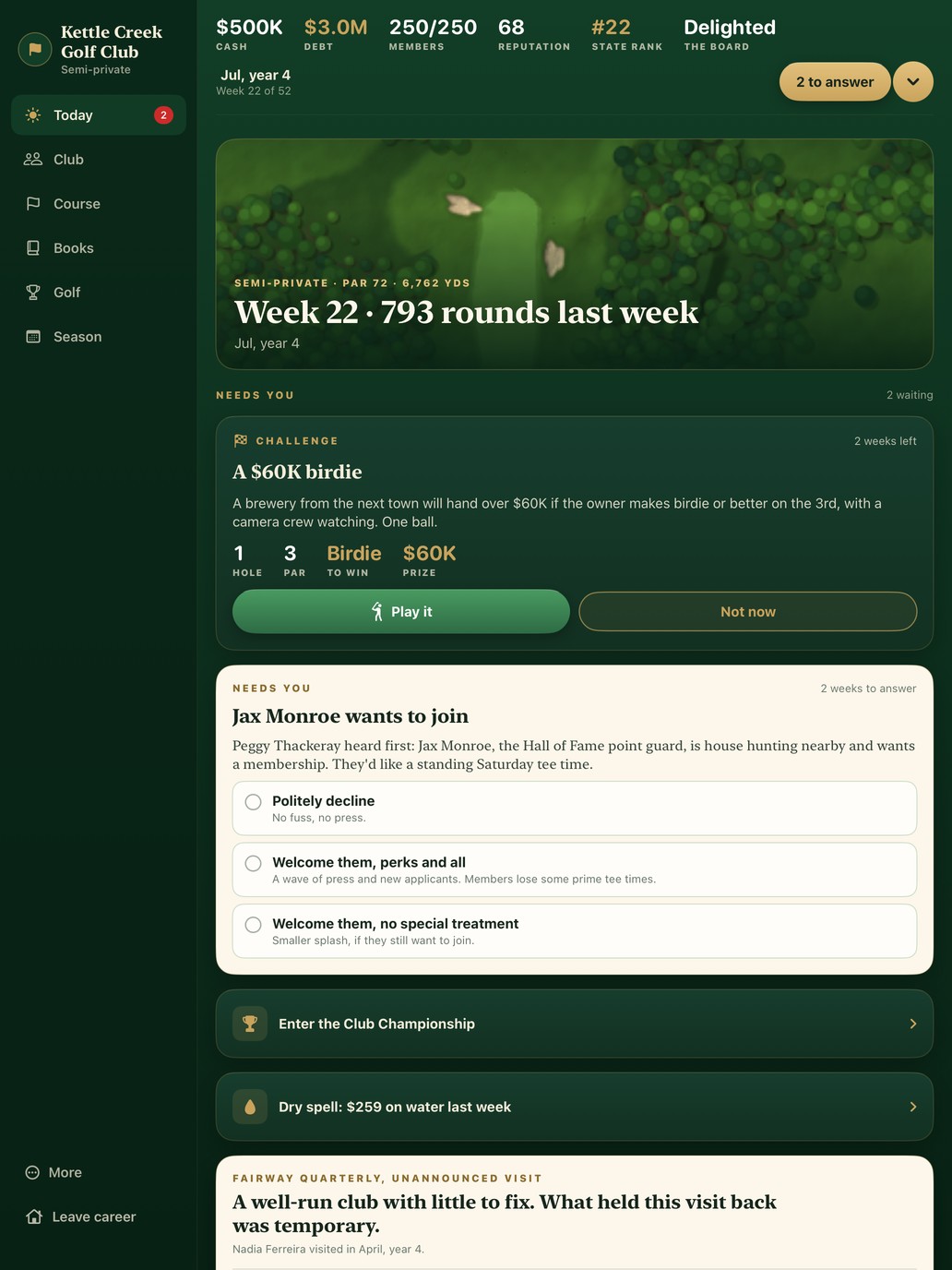
Set the fees, hire the staff, decide how firm the greens are and how long the rough grows. Things go wrong and you decide what to do about them. Bid for events, and when one comes to your course, the field plays it for real and the scoring averages tell you which holes worked. When you want a new project, sell the club and start a new design, with your name and playing record carried over. With Apple Intelligence on, the week’s club news gets written up as short stories about what happened.
Apple Intelligence powers Describe for holes and courses, reads requests to Ask the architect and writes club news on supported iPhone and iPad models with iOS 26 or iPadOS 26 and later. It runs on your device. Without it, the manual course designer remains available and club news appears as plain notes. Describe and AI refinements are offered only when Apple Intelligence is ready. Without it, Ask the architect uses a built-in reader that understands common requests, and the forecast works on every device.
Own the club, play the tour.
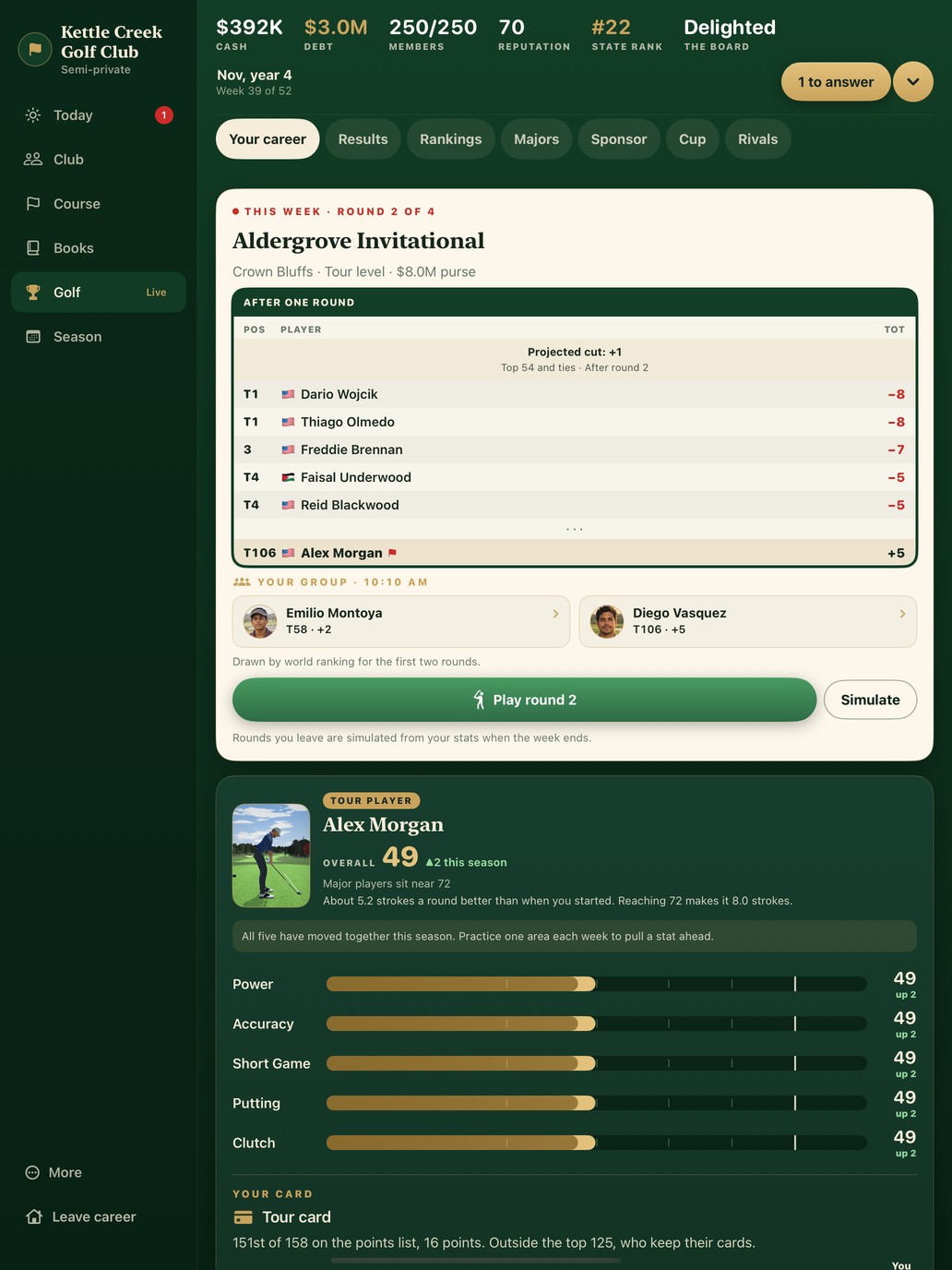
You own the club, and you play too, under your own name. Start at section events and work up through the State Open and the Developmental Tour to tour stops, and earn your place in four majors each season. Play the Linkswright Championship at Linkswright National, the National Open, the Open Links Championship and the Professionals’ Championship, with a rotation of championship venues. Play each round yourself on the venue, or let your form play it. Good finishes raise your club’s reputation, and the prize money goes into its account. If you hire a head pro, expect the odd challenge to a match.
Every two seasons the Tour’s best play the Linkswright Cup, the United States against the Internationals over three days of foursomes, four-ball and singles. Earn your place on the points list or as a captain’s pick, then play your matches or let them play out. Hold a tour card and the equipment makers call with deals that pay into your club’s books.
Your shots and theirs, same physics.
You swing with a touch stick, and you can curve the ball around a tree or keep it low under the wind. The ball model is tuned against launch monitor numbers from the tour, so a good drive goes about as far as a good drive should.
Build a bag of up to fourteen from thirty clubs. Pick a blade putter for feel on pace or a mallet that keeps mishits closer to the line. Choose an iron family, driver head and wedge bounce, tune your lofts, pick a white, pink, yellow or split yellow-and-blue ball, and compare actual shots on the driving range, or work on chipping, bunker shots and putting in the short game area. Review your round stats and share a scorecard or a favorite hole. Play casual rounds, chase your course record, or enter your club’s annual championship for gross and net honors.

What it costs
Linkswright is free to download. You can play Linkswright National, use every practice mode, and design one course of your own and play it as much as you like. If you want the career, or more than one course, there's a one-time $2.99 USD unlock. Local prices may vary. There's no subscription and there are no ads.

| Free | $2.99 USD unlock |
|---|---|
| Play Linkswright National | Career mode, from breaking ground to hosting the tour and playing on it |
| Driving range and short game practice | Save as many courses as you want, publish them to the Course Gallery and play other players’ courses |
| Design, describe and play one course of your own | Restore on your devices using the same Apple Account |